Section 01
The bill shows up after the critique fleet
Design orgs discover agent cost in the wrong order. First comes delight at faster drafts. Then parallel critique agents, full-page screenshots stuffed into context, and sprawling design-system files loaded on every turn. Then finance asks why the team seat invoice and the API overage both jumped in the same month.
Agent FinOps for design is not about denying people tools. It is about knowing which loops are expensive, which checks must stay fail-closed anyway, and which habits burn money without improving decisions. Visual work is heavier than code-only work: images, repeated captures, and long DESIGN.md context change the arithmetic.
This field note pairs with plan-selection guidance elsewhere on the site. Here the focus is operational: measure, budget lanes, and put cheap gates before expensive judges.
Section 02
Where design-agent tokens actually go
Five buckets explain most invoices. Context load is the silent one: huge instruction files and entire component trees pulled into every session. Generation is visible and usually not the villain. Capture is sneaky when screenshots enter the model context as base64 instead of living on disk. Critique multiplies cost when three agents each re-read the same images. Retries after vague prompts multiply everything.
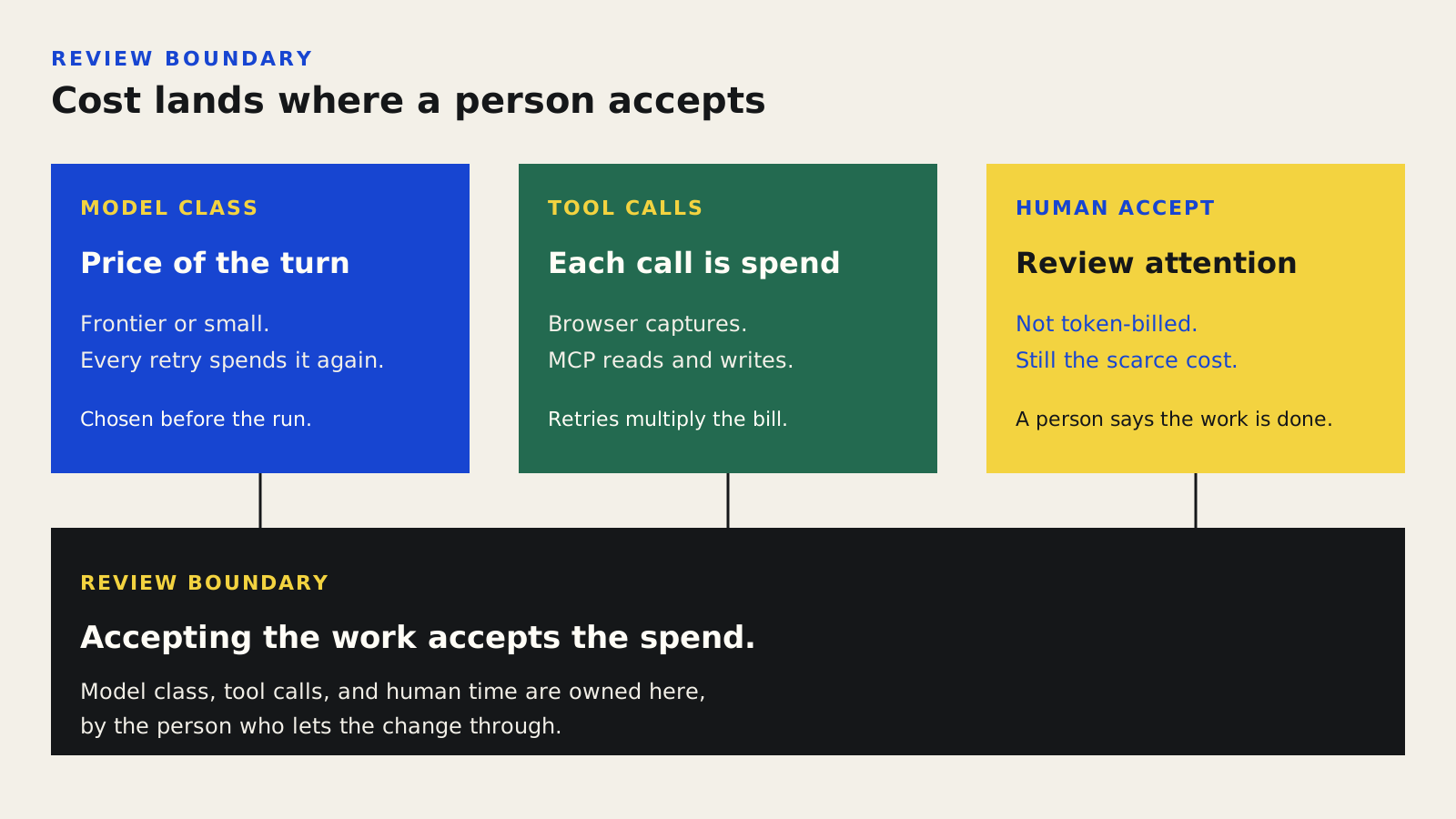
Model class, tool calls, and human acceptance are the costs. They are owned when a person accepts the work.
Section 03
Case study: three critique agents, one clipped CTA
A product design team ran a "quality bar" experiment: every marketing landing PR spawned three critique agents (visual, a11y, brand) with full-page desktop and mobile screenshots inlined into each prompt. In two weeks they caught real issues — and spent more on critique than on generation. One recurring blocker, a clipped mobile CTA, was something a deterministic visibility assert would have caught for nearly nothing.
They changed the order. Capture wrote files to disk. A Playwright check failed on CTA visibility and axe serious findings. Only passing candidates reached a single judge agent with cropped regions, not three full-page triplicates. Monthly spend dropped; blocker escape rate did not rise. The FinOps win was sequencing, not cheaper models.
Section 04
Good vs bad cost habits
Cost control should feel like craft, not rationing theater.
Good: save captures to disk; pass paths or crops
Good: axe and layout asserts first
Good: lean AGENTS.md + on-demand skills
Good: budget N critique calls per PR
Good: named owner + weekly spend skim
Spend where judgment is scarce; save where scripts suffice.
Section 05
A lightweight FinOps ritual
You do not need a full FinOps platform on day one. You need a weekly fifteen-minute skim and a written budget for expensive lanes.
Owner: [design eng manager]

Inputs:
- Seat plan usage / credit burn (vendor dashboards)
- API/BYOK invoice if any
- Count of eval:visual and critique runs this week
- Top 3 longest agent sessions (ask the team)

Questions:
1. Did critique spend exceed generation spend?
2. Which loops inlined images instead of using disk captures?
3. Which failures should move to deterministic gates?
4. Any BYOK key without an owner?

Actions (max 3):
- [ ] gate change
- [ ] prompt/context trim
- [ ] budget or plan change

Log path: ops/agent-finops/YYYY-MM-DD.md
Section 06
Budgets, limits, and what not to cheap out on
Do not save money by deleting accessibility scans or by skipping mobile captures. Save money by refusing duplicate judges, oversized context, and conversational retries that should have been a rewritten brief. Prefer subscription tiers that match daily design-to-code intensity over surprise BYOK bills nobody watches.
Publish a simple policy: fail-closed structural evals are mandatory; multi-agent critique is opt-in above a PR size threshold; screenshot-to-model requires crops. Agents should read that policy from AGENTS.md so the cheapest correct path is the default path.
- Mandatory: capture on disk, axe on changed interactive routes, named spend owner.
- Metered: LLM visual judge, multi-agent critique fleets, huge context dumps.
- Forbidden as default: base64 full-page images into three parallel critics.
- Revisit budgets monthly; tooling prices move faster than org habits.
Sources
Sources & further reading
- Claude pricing
Official Claude plan ladder and metering entry point for seat-based spend.
- Codex pricing and credits
How Codex usage maps to credits on ChatGPT plans.
- microsoft/playwright-mcp
Browser tooling for disk-based captures and accessibility snapshots instead of blind critique.
- Anthropic: Claude Code best practices
Guidance on specific instructions and iteration loops that reduce wasted retries.


